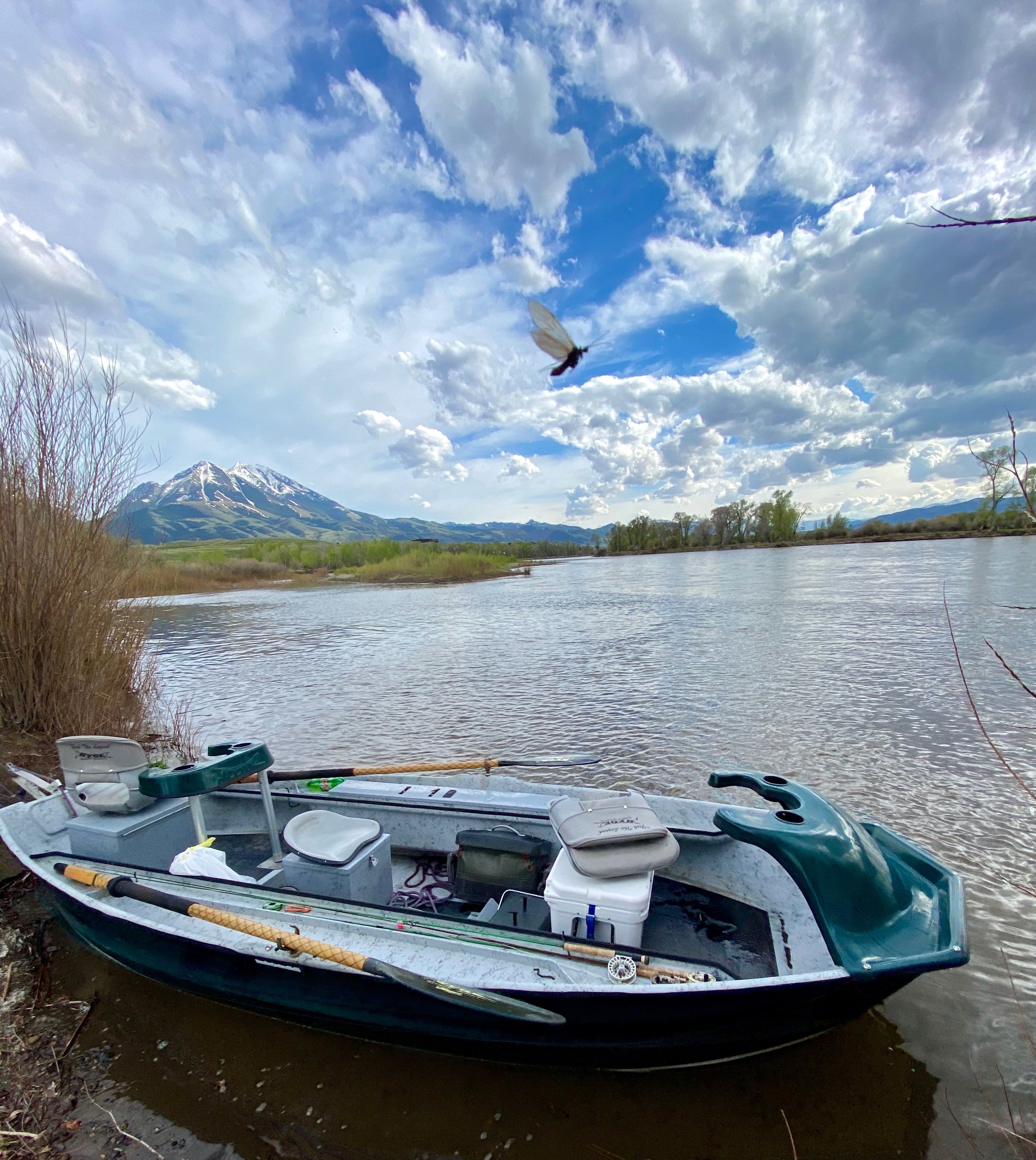
The Mother's Day Caddis Hatch On The Yellowstone River
I still check the gauges every morning in late April. When water temps hold in that 52 to 54°F range overnight, I know exactly what is coming. The Mother's Day Caddis is stirring on the bottom of this river, itching to go, and when it fires in Paradise Valley and East of Livingston there is nothing else like it on the Yellowstone.
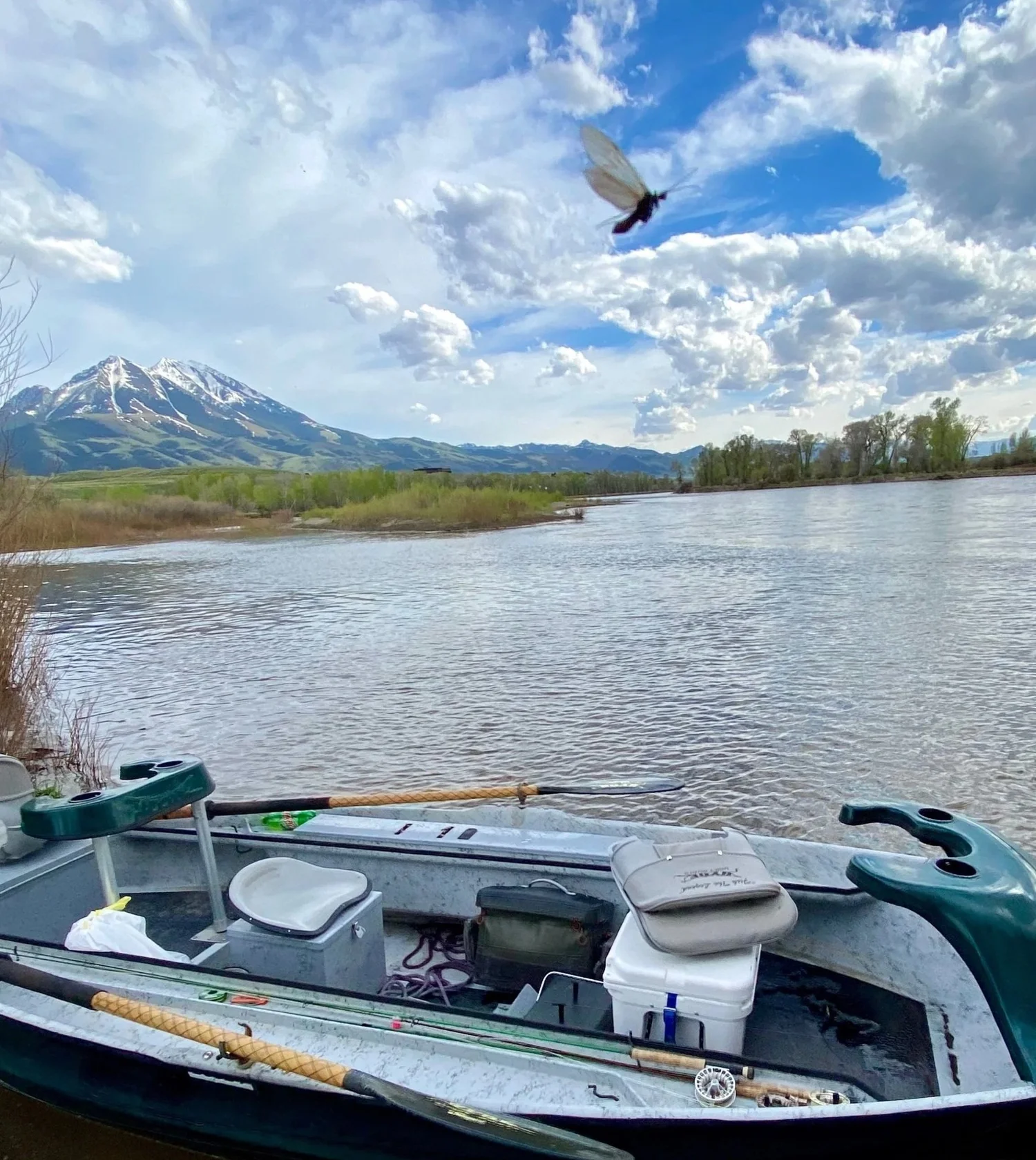
This is not the Salmonfly. When the Salmonfly hatch happens on the Yellowstone there is a plethora of other stonefly species and mayflies coming off at the same time, giving trout a buffet of options and making pattern selection a guessing game. The Mother's Day Caddis is different. It is the most single-specific hatch on the Yellowstone River. One bug, one window, and when it is on the trout know exactly what they are eating. That focused feeding behavior is what makes this hatch so extraordinary and so fishable.
But knowing the bug is only half of it. You have to be there. You have to put in the time on the water and figure out what the fish are telling you that day, that hour, that specific run. The great anglers understand this. My good friend Paul Weamer built his reputation on the Delaware River, one of the most technical and demanding tailwaters in the country, standing in that river day after day figuring out what selective trout wanted and when they wanted it. That kind of water time cannot be replaced by reading a book or studying a hatch chart. The chart gets you close. The river teaches you the rest.
That is what twenty-five years on the Yellowstone looks like. And every spring when this hatch starts stirring, there is still something new to figure out.
This is also your last shot for a while. Once peak runoff hits and the Yellowstone blows out, the river goes quiet. Colored up, cold, and unfishable. That window does not reopen until late June. The Mother's Day Caddis hatch is the crescendo of spring. When conditions are right, you do not wait. You go.
Water Temperature And Conditions: The Key To Everything
This hatch does not run on the calendar. It runs on the river. I have seen it fire on April 28th. I have seen it not show until the second week of May. The calendar means nothing. The water temperature means everything.
Overnight temperatures matter just as much as afternoon highs. What you want is a string of mild overcast days with overnights holding in the 40s. Overcast skies actually help. They insulate the water from the sharp temperature drop that clear spring nights bring and keep that thermal consistency locked in. Three to five days of consistent warmth around the clock is what builds the pressure that fires a real blizzard hatch.
Know Your Bug: The American Grannom
The Mother's Day Caddis is Brachycentrus occidentalis, the American Grannom, a size 14 to 16 insect with a dark olive to near black abdomen and gray olive wings. It is a case builder, spending the entire winter on the riverbed inside a small square case constructed from sticks. When the river hits that temperature threshold and holds it, the whole population cuts free at once. Zero to blizzard in a single afternoon. I have seen it happen on this river more times than I can count and it still makes my hands shake a little.
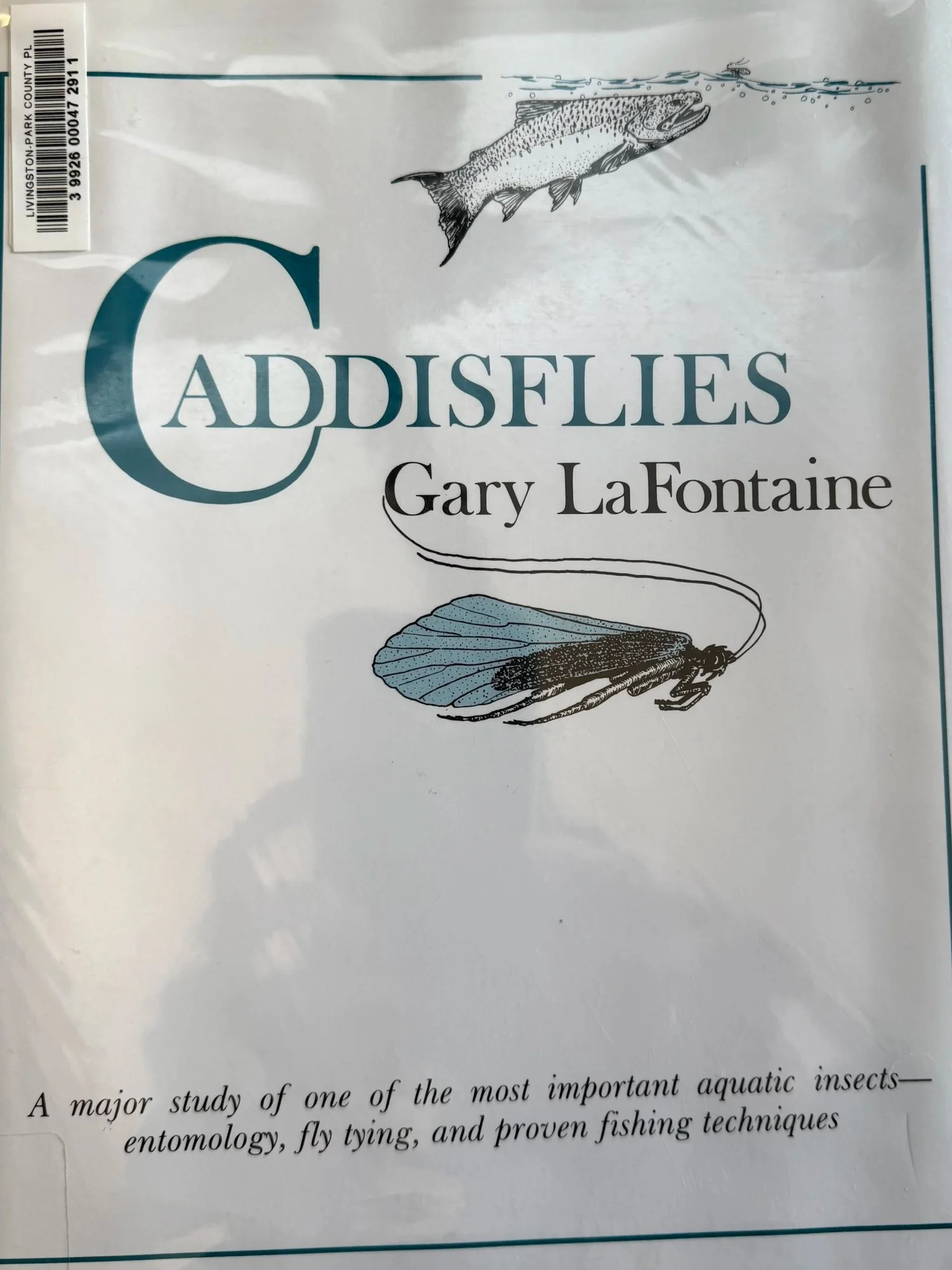
Gary LaFontaine was a true pioneer. His book Caddisflies was built from over 200 hours of underwater observation. He put on a dive tank and watched trout eat caddis pupae from below the surface. What he found changed everything. Trout key most aggressively on the shimmering gas bubble the ascending pupa carries beneath its shuck during its rocket ride from the bottom to the surface. That single discovery gave birth to the Sparkle Pupa, tied with Antron yarn to replicate that natural glow. It is still one of the most important patterns in my boxes during this hatch. Every year.
My good friend Paul Weamer, Hall of Fame fly fisherman and author of The Bug Book: A Fly Fisher's Guide to Trout Stream Insects, has done as much as anyone alive to make insect knowledge practical on the water. His book is illustrated, clear and built around real fishing application — hatch charts, identification and fly recommendations that actually make sense when you are standing on the bank with bugs flying into your face. I hand it to clients before their trips and they show up to the river understanding what they are about to fish. That makes for a better day for everyone in the boat.
Knowing which stage the fish are keyed on at any given moment is the difference between a slow morning and a bent rod. Here is how the day builds from the bottom up.
- Larva On the bottom in its case before the hatch even starts. A bright green cased caddis larva pattern bounced deep early in the morning finds fish long before a single adult shows on the surface. Do not sleep through this window.
- Pupa Cuts free and rockets upward trailing LaFontaine's signature gas bubble. Sparkle Pupa near the bottom or just under the film. This is where those first splashy explosive rise forms come from — trout chasing ascending insects upward from depth.
- Emerging Adult Stuck in the surface film, wings slowly filling. One of the most heavily eaten stages of the entire hatch and the one Craig Mathews has spent decades dialing in on these waters. This is where the X Caddis lives.
- Adult High riding and fully winged on the surface. Elk Hair Caddis or Parachute Caddis in a 12 to 14. Go bigger during blizzard conditions so your fly stands out from the millions of naturals on the water.
- Spent Egg Layer Last light. Females return to the surface, deposit eggs and fall spent in the film. The evening window through Paradise Valley and East of Livingston can be the best dry fly fishing of the entire day. Do not leave early. Never leave early.
Craig Mathews And The Patterns That Work
For patterns built specifically around this hatch, Craig Mathews of Blue Ribbon Flies in West Yellowstone belongs at the top of the list. He has been fishing the caddis hatches of the Madison and greater Yellowstone Country for over 53 years. I have never had the chance to cross paths with him but it would be a genuine honor. His flies are in my boxes every May without fail because they simply catch more fish than anything else when the Yellowstone fish are locked onto this bug in the film.
His X Caddis and X2 Caddis imitate the crippled or stillborn adult trapped in the surface film — one of the most heavily eaten stages of the entire emergence. The Z-lon trailing shuck is what makes this fly different from everything else in your box. When trout are rising hard and refusing a high riding dry, the X Caddis is almost always the answer. His Iris Caddis is a hackled surface film emerger that holds up through heavy action and consistently accounts for fish during the peak of the hatch on this river.
The technique Mathews advocates is worth practicing before you get on the water. A short sideways twitch of the fly followed by a dead drift, pulling the pattern just under the surface and letting it pop back up in front of a rising fish. It replicates a struggling pupa fighting its way to the top and it turns refusals into eats every year on this river. Once you feel it work you will use it for the rest of your life.
What You See · What You Tie On · How You Fish It
LaFontaine's bug knowledge, Weamer's hatch understanding and Mathews's patterns all come together on the water right here. Read what the river is showing you, match the moment and work through the day from bottom to top. This is the grid I use in my own boats.
| What You See | Pattern | Size | How To Fish It |
|---|---|---|---|
| No surface activity, fish holding deep, early morning | LaFontaine Sparkle Pupa (olive/ginger) | 14 | Weighted, dead drifted along the riverbed under an indicator through holding seams |
| First splashy explosive rises just under the surface | LaFontaine Sparkle Pupa (unweighted) | 14 | Just beneath the film, unweighted. Use the Mathews twitch — short sideways pull, let it pop back up through the rise |
| Bugs showing on the surface, fish rising but not locked in | Craig Mathews Iris Caddis | 14 | Dead drift in the surface film. Let the body sit in the film not on top. Do not grease the whole fly |
| Heavy hatch, adults everywhere, fish up in all the obvious water | Elk Hair Caddis (peacock body) | 12–16 | Standard dead drift. Go up a size during the thick of it so your fly stands out from the millions of naturals on the water |
| Fish rising selectively, refusing the high riding dry | Craig Mathews X2 Caddis | 14 | Dead drift with the Z-lon shuck trailing in the film. If still refusing, use the Mathews twitch — pull under slightly and let it swing back up in front of the fish |
| Boat fishing, fast broken water, hard to track a small fly | Parachute Caddis (olive, hi-vis post) | 14 | Dead drift. The hi-vis post keeps your eye on the fly in heavy chop. Good search pattern covering water from the oars |
| Evening, soft sipping rises in the flats and slow water | Missing Link | 14 | Dead drift flush in the film. No floatant on the body. Long leader, light tippet, slower water. These fish are looking hard |
| Last light, egg laying flights over the seams | Mother's Day Soft Hackle | 12–14 | Swing across current seams on a tight line, slightly downstream. Let it hang at the end of the swing before picking up. That hanging pause is often what triggers the eat |
Rigging Notes
Dropper Rig During The Main Hatch
Run your Elk Hair Caddis or Parachute Caddis as the indicator dry with the Sparkle Pupa or X Caddis on 18 to 24 inches of tippet off the bend. During the thick of the hatch you will catch as many fish on the dropper as the dry. The dry shows you exactly where the subsurface fly is at all times — do not overthink it.
Long Leader For The Evening Sippers
When fish are sipping spent and cripples in slow water through the Paradise Valley flats and East of Livingston, go to a 12 foot leader. The soft hackle swing works better on a shorter 9 foot setup. Do not mix the two up.
Tippet
4X handles most situations during the hatch. Drop to 5X for selective fish refusing the X Caddis in slower clearer water. Do not go lighter than that on the Yellowstone. These are not spring creek fish and the river has enough current to straighten you out if you go too fine.
Yellowstone River Fly Fishing Near Livingston
The Mother's Day Caddis is the crescendo of spring on the Yellowstone River. Once it passes, runoff takes over and the river goes quiet until late June. This is the window and it does not last long. We watch the USGS gauges every day starting in late April, and when Paradise Valley is itching to go we know it before most people are even thinking about it.
Give Swan's Fly Fishing a call. We will put you on the right stretch of the Yellowstone — from the upper valley through Livingston and East of town — at exactly the right time with a fly box built on the knowledge of the best caddis minds this sport has ever produced.