DePuy’s & Armstrong’s Spring Creek Fly Fishing
DePuy’s and Armstrong’s are Paradise Valley spring creeks with clear water, steady spring-fed flows, and year-round technical trout fishing. These are private-water walk-and-wade fisheries where good drifts, careful approach, and small details matter more than long casts.
Stable Water & Technical Fishing
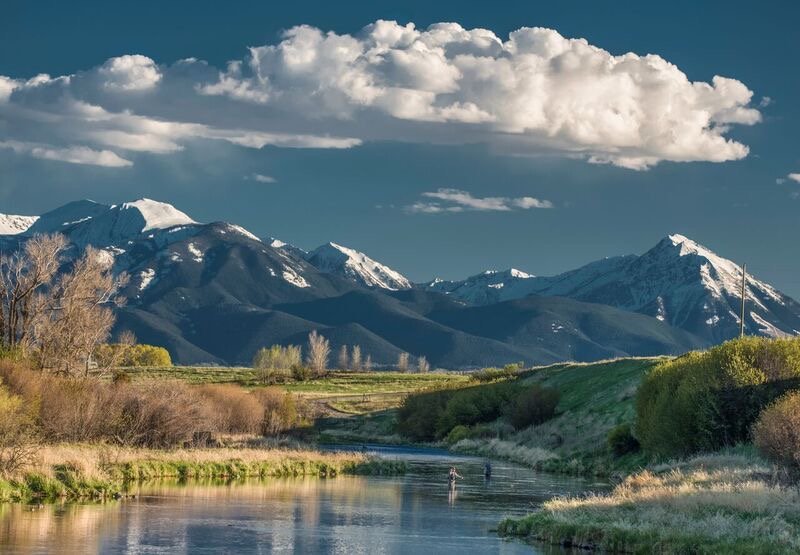
Armstrong’s and DePuy’s are two sections of the same spring creek system in Paradise Valley. Armstrong’s is the upstream ranch section, while DePuy’s continues downstream and offers more varied water, including riffles, flats, and deeper holding structure.
Because they are spring-fed rather than runoff-driven, they stay clear and fishable through much of the year when many freestones are blown out, frozen up, or too warm. That stability, combined with limited rods and prolific insect life, is what makes them such important fisheries for both learning and high-end technical dry-fly fishing.
Fishing the Spring Creeks Through the Year
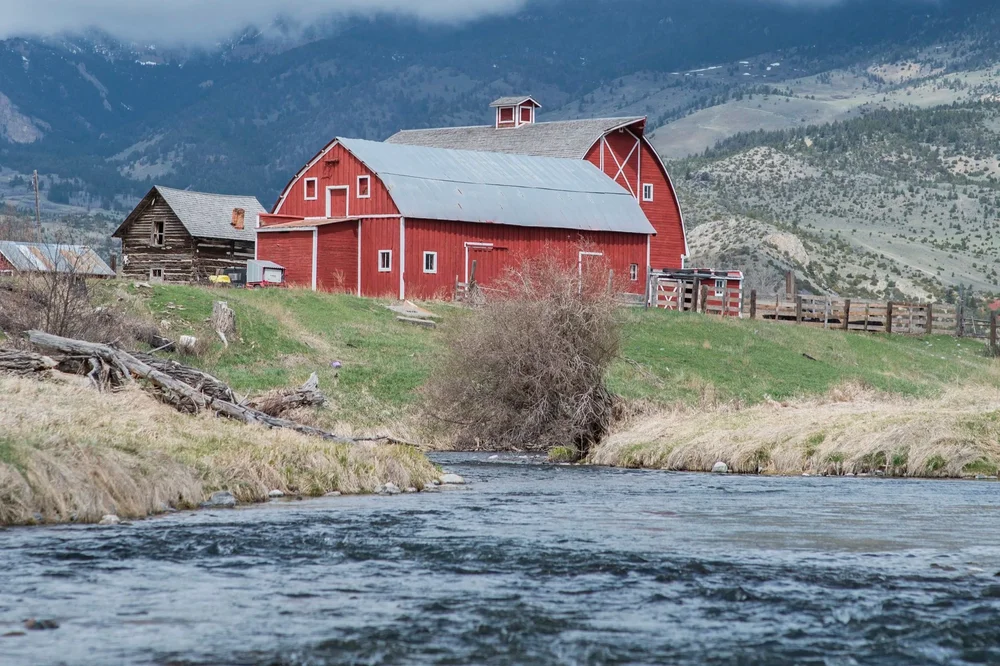
Late Winter & Early Spring
Midges and blue-winged olives are the backbone of the program, with nymphing built around small bugs, scuds, and sowbugs. This is one of the best times to learn spring creek fundamentals because the water stays stable and the pressure is lighter.
Late Spring & Early Summer
PMDs become the headline hatch, supported by caddis, Baetis, and other mayflies depending on timing. This is the classic Paradise Valley dry-fly season and the stretch when reservations are hardest to secure.
Mid-Summer
PMDs taper but do not end the fishing. Sulphurs, caddis, terrestrials, and spinner falls keep fish looking up, while in-stream weeds create narrow feeding lanes that reward precision.
Fall & Winter
Baetis, midges, and quiet technical sight-fishing define fall and winter. These colder months are often some of the best times to learn how spring creek trout set up and feed.
Small Details, Big Results
Weed Edges & Lanes
Trout use weed beds, drop-offs, and soft cushions below riffles in ways that look subtle until you learn to read them. The water is clear enough that you can often see both the fish and the mistake.
Small Flies & Drifts
Long leaders, light tippet, and exact presentations matter here. Most days revolve around modest-size dries, emergers, and small subsurface bugs rather than heavy rigs or big-water tactics.
Stealth & Approach
These fish see pressure and clear overhead light. We move slowly, stay off the skyline, and build each shot around angle, current speed, and what the fish is actually doing.
Skills That Travel
Time on spring creeks sharpens everything else. Better line control, cleaner mends, and more intentional fly changes carry directly onto rivers like the Yellowstone and Madison.
DePuy’s vs Armstrong’s
Both are technical private-water spring creeks, but they do not fish exactly the same. Armstrong’s is often the more classic flat-water dry-fly classroom, while DePuy’s gives you more structure and more ways to pivot through a full day.
DePuy’s Spring Creek
DePuy’s is the longer downstream section and is known for variety: riffles, flats, deeper runs, and a broader menu of holding water. It is one of the most useful winter and shoulder-season options in the valley.
Armstrong’s Spring Creek
Armstrong’s is the upstream ranch section and is especially strong when you want elegant dry-fly water, sight-fishing, and a true lesson in precision. Summer PMD periods are a major part of its identity.
Ranch Info & Policies
Both ranches maintain their own websites with reservation details, rod-fee information, and current policies. We coordinate availability and help match your dates to the right creek and season.
Skill Levels & Expectations
Newer Anglers
You do not need to be an expert to fish spring creeks well. Winter and shoulder-season days are often the best learning windows because there is less pressure and more room to focus on fundamentals.
Intermediate & Advanced
These creeks are ideal for anglers who enjoy problem-solving. Tiny changes in fly, angle, depth, and drift can matter a lot, which is exactly why experienced anglers return to them year after year.
What a Spring Creek Day Looks Like
Spring creek trips are walk-and-wade days built around observation and timing. A full day may cover only a modest amount of water because so much of the value is in reading fish, planning shots, and adjusting carefully from one feeding lane to the next.
We rig for dries, emergers, and light nymphing, then shift as the hatch and light change. The goal is not just to catch fish, but to leave understanding why a fish ate — or why it did not.
Winter & Spring Creek Info
These creeks are especially valuable when freestones are cold, icy, or unstable. Lower-pressure periods and consistent water conditions make winter and shoulder seasons one of the smartest times to learn private-water spring creek fishing.
If you already have dates in mind, the simplest move is to hold a day and let us sort out whether DePuy’s or Armstrong’s is the better fit. If you are comparing spring creeks to rivers, send your dates and goals and we will point you toward the water that gives you the best day.
Rod Fees & Availability
- Rod fees change by season, with summer dates carrying the most demand.
- Prime dates are limited, which is why flexible planning matters on private water.
- Winter and shoulder seasons often offer the best mix of learning, access, and lower pressure.
Ready to Fish?
- We use the same spring creek booking flow for both DePuy’s and Armstrong’s.
- Instruction can stay beginner-friendly or get as technical as you want it to be.
- These days are some of the best skill-building trips in the entire program.