Trust What You See, But Know Where to Look
I’ve always been raised to trust my eyes. That instinct matters in the mountains and it matters on the river. Right now, if you’re spending time in the valley, it’s hard to ignore what winter looks like. Hillsides and fields are bare and brown, more like mid-spring than the middle of February. South-facing slopes have been exposed for weeks, and from town it can feel like winter never really settled in.
When you spend your days on the river, you get used to reading what’s around you. You watch banks, side channels, and the way the valley responds to warm and cold spells. But it isn’t the whole story.
The water that shapes the Yellowstone comes from higher ground, from places where snow settles deeper and colder and where winter moves at a different pace. Elevation changes everything, keeping temperatures colder and allowing snow to last far longer than it does in the valley.
Looking Up From the River
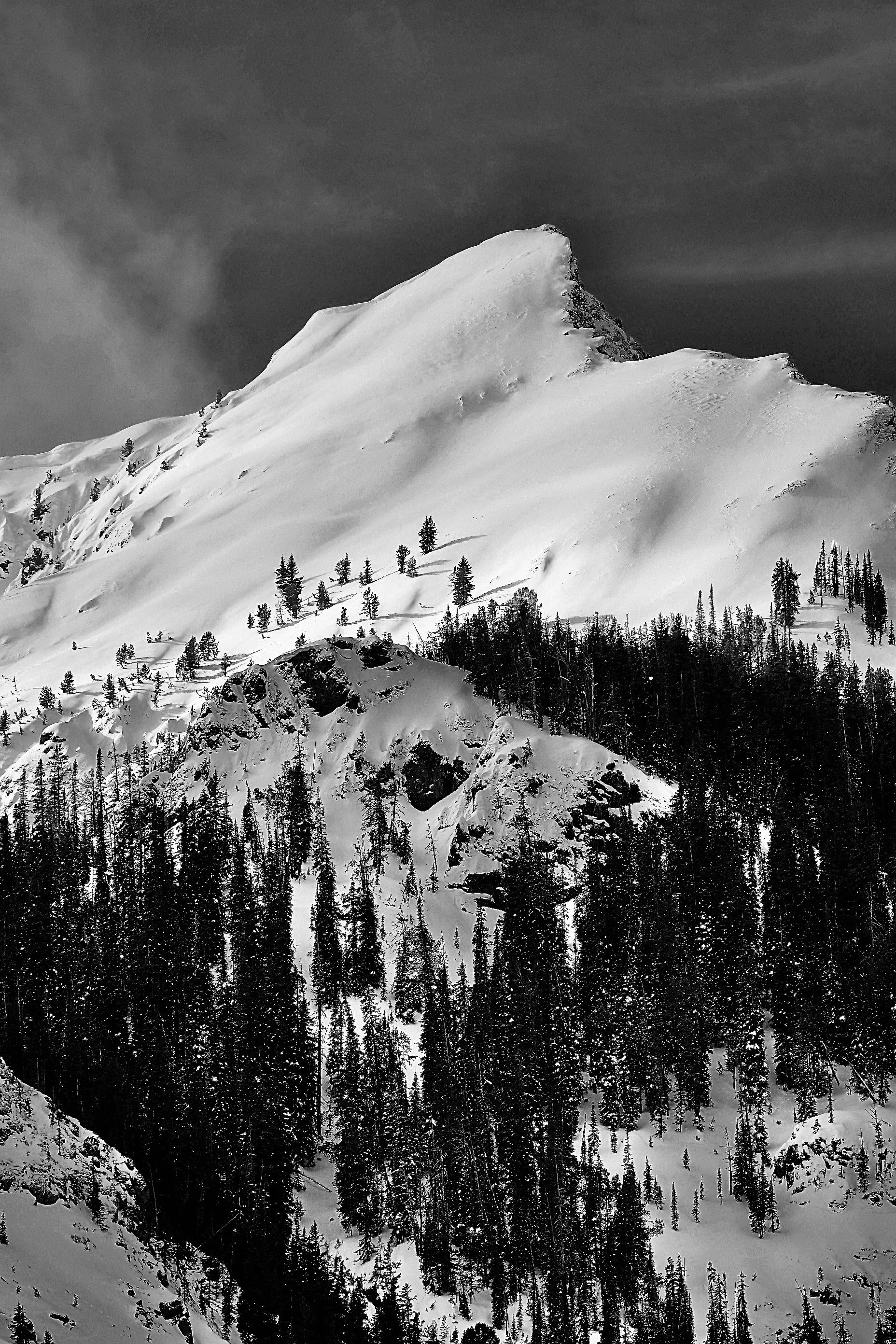
Most of the snow that matters sits well above Livingston. The Absarokas, the Crazy Mountains, and the high country near Cooke City collect and hold snow differently than the open valley floor. What melts quickly along the river often stays locked in place at elevation, protected by colder temperatures and terrain that accumulation over early loss.
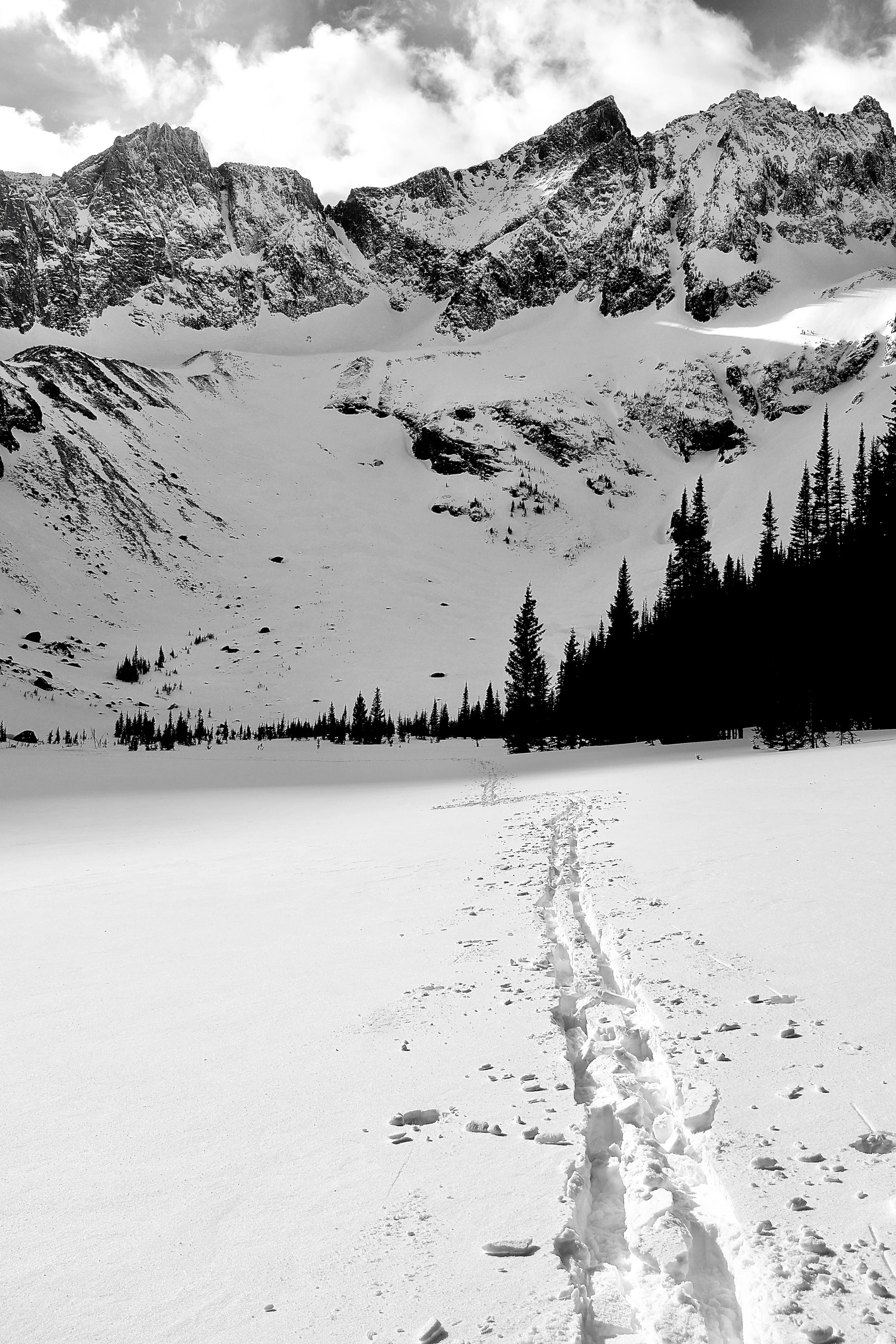
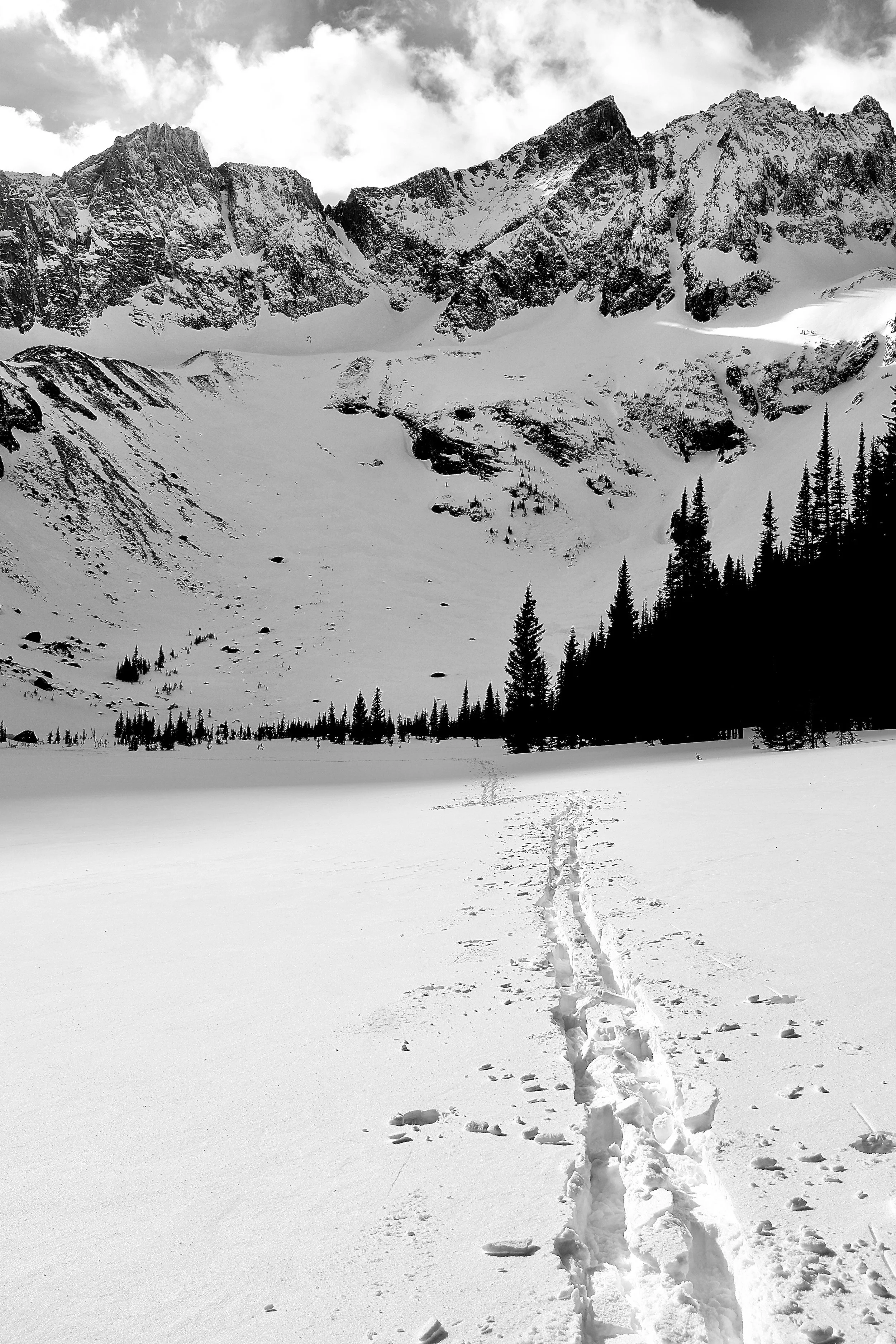
This photo was taken recently by Ken Kapinski during a high-alpine trek to Twin Lakes in the Crazy Mountains. Ken is part mountain goat and has a way of getting into places most people never see in winter. He’s seeing snow where it matters, tucked into basins that hold onto winter long after the valley has moved on. This is the kind of perspective you don’t get from the riverbank.
What the Snowpack Is Telling Us
Snowpack data doesn’t break neatly by mountain range, but the basins that include the Absarokas and the Crazy Mountains are generally tracking somewhere around seventy to ninety percent of normal snow water equivalent for this point in the season. That’s not a standout year, but it’s far from empty, and it matters how and where that snow is being held.
Temperature is just as important as depth. Snow that stays cold melts differently, releasing water gradually instead of all at once. That slower release is what helps carry rivers into early summer rather than pushing everything downstream too quickly.
What That Means for the Yellowstone
Montana has seen winters where the valley looked thin and the river still showed up when it mattered. It has also seen years where early confidence didn’t hold. The difference almost always comes down to what’s happening in the high country and how spring unfolds.
Right now, those higher elevations are still very much part of the summer picture. We do have the snow and winter isn’t finished yet. Cold nights and late storms can make a real difference, and it’s too early to pretend the outcome is already decided.
We’ll keep watching it closely and we’ll keep sharing what we’re seeing as the season takes shape.
Photo credit: Ken Kapinski, Twin Lakes, Crazy Mountains